
AI Functions for AIoT-Enabled Aftermarket Parts Manufacturing
Artificial Intelligence and Industrial IoT Intelligence for Automotive Replacement Parts Production, Service Parts Inventory, and Connected Manufacturing Operations
Contact Partsentra AIAI Intelligence Framework for Aftermarket Parts Manufacturing
Aftermarket Parts Manufacturing is a specialized segment of the automotive industry focused on producing replacement components, service parts, repair components, accessories, and vehicle maintenance products after original vehicle production. Unlike OEM production environments, aftermarket manufacturing requires flexibility to support large part catalogs, long service periods, fluctuating demand, legacy vehicle systems, and diverse customer requirements.
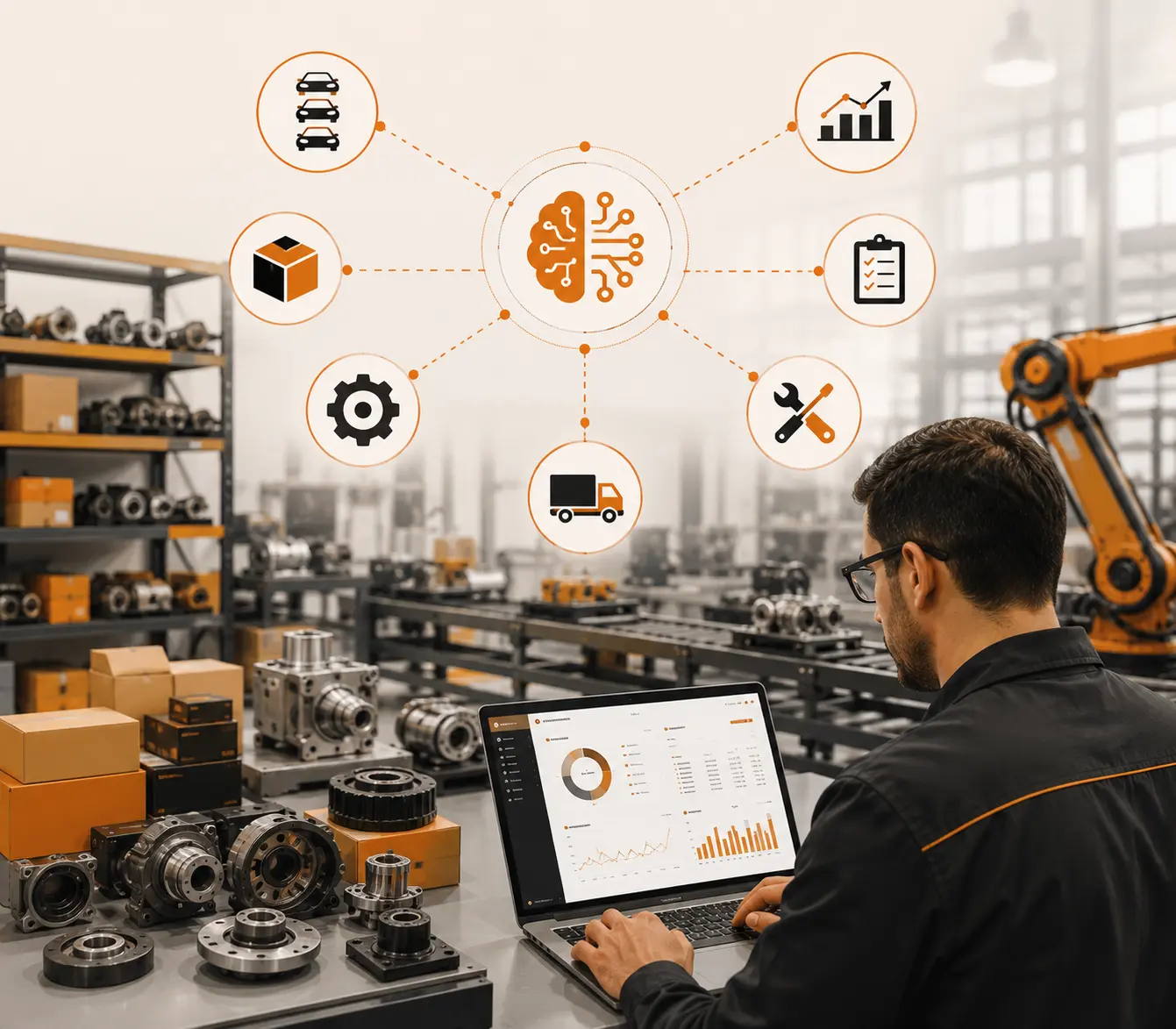
AIoT technologies create a connected operational intelligence layer that links physical manufacturing processes with enterprise data systems. By combining artificial intelligence analytics with real-time IoT data collection, manufacturers can convert production events, inventory movements, equipment conditions, and quality records into actionable operational insights.
The AIoT intelligence framework for aftermarket parts manufacturing focuses on five major capability areas:
- Aftermarket parts inventory intelligence for demand forecasting, spare parts availability, and warehouse optimization
- Service parts asset intelligence for production equipment monitoring, tooling utilization, and material handling improvement
- Aftermarket production flow intelligence for manufacturing scheduling, work-in-progress visibility, and production optimization
- Aftermarket parts traceability intelligence for component genealogy, serialization, recall management, and supplier quality analysis
- Temperature-controlled parts intelligence for environmental monitoring and storage compliance where required
AIoT-enabled aftermarket manufacturing environments typically integrate:
- RFID systems for automated identification and inventory tracking
- BLE location systems for indoor asset visibility
- LoRaWAN sensors for long-range industrial monitoring
- Cellular IoT connectivity for distributed facilities
- Industrial Wi-Fi networks for connected production environments
- Industrial Ethernet for machine-level communication
- Edge AI gateways for real-time manufacturing analytics
- Machine vision systems for automated inspection and identification
- ERP integration for business process intelligence
- MES integration for shop floor visibility
- Industrial data systems for operational analytics
This connected system supports a digital manufacturing environment where aftermarket parts operations can be monitored, analyzed, and optimized continuously.
Aftermarket Parts Inventory Intelligence
AI Inventory Forecasting for Service Parts
Automotive aftermarket parts manufacturers face complex inventory challenges because replacement component demand depends on vehicle age, repair cycles, geographic usage patterns, fleet composition, seasonal maintenance activity, and long-term vehicle availability.
Traditional forecasting approaches based only on historical demand may not accurately predict low-volume, intermittent, or highly variable service parts requirements. AI-based inventory forecasting improves prediction accuracy by analyzing multiple operational and market signals.
AI inventory forecasting models evaluate:
- Historical aftermarket parts demand
- Vehicle application information
- Repair and replacement trends
- Distributor and customer order patterns
- Warranty and service data
- Supplier lead times
- Production capacity constraints
- Regional demand variations
Machine learning algorithms identify demand patterns for replacement components and recommend optimized production and stocking strategies.
AI-powered service parts forecasting helps manufacturers:
- Improve replacement parts availability
- Reduce excess and obsolete inventory
- Optimize safety stock levels
- Improve production planning accuracy
- Support long-term service commitments
- Reduce inventory carrying costs
Replacement Parts Stock Optimization
Maintaining the correct inventory level for aftermarket components is critical because manufacturers must balance service availability with the cost of holding thousands of individual part numbers.
AI-powered stock optimization analyzes inventory behavior across warehouses, manufacturing facilities, and distribution networks.
AI models evaluate:
- Inventory turnover rates
- Demand variability
- Part criticality
- Supplier performance
- Production lead times
- Warehouse capacity
- Service level requirements
Advanced AI systems can support multi-echelon inventory optimization by determining where replacement parts should be stocked across manufacturing plants, regional warehouses, and distribution centers.
RFID-enabled inventory systems provide real-time visibility into parts movement, allowing AI systems to identify inventory discrepancies, unauthorized movement, stock shortages, and process inefficiencies.
Spare Parts Reorder Intelligence
Aftermarket parts manufacturers often manage thousands of replacement components with different replenishment characteristics. AI-powered reorder intelligence improves purchasing and production decisions by continuously analyzing operational conditions.
AI reorder systems consider:
- Current inventory availability
- Open production orders
- Supplier delivery performance
- Customer demand signals
- Warehouse consumption rates
- Manufacturing capacity
- Material availability
Unlike fixed reorder-point systems, AI-driven replenishment models dynamically adjust recommendations based on real-time operational conditions.
Integration with ERP, warehouse management systems, and procurement systems enables automated inventory decision workflows.
Slow-Moving Aftermarket Parts Analytics
Many automotive replacement components remain commercially relevant for extended periods because vehicles continue operating years after original production ends. This creates challenges related to slow-moving inventory and long-tail demand.
AI analytics identify:
- Aging inventory categories
- Low-demand replacement components
- Parts affected by vehicle lifecycle changes
- Excess stock conditions
- Potential obsolescence risks
AI-driven insights help manufacturers determine whether to maintain inventory, adjust production frequency, redesign packaging, consolidate storage locations, or modify supplier strategies.
Multi-Warehouse Service Parts Intelligence
Large aftermarket parts manufacturers frequently operate multiple warehouses, regional distribution centers, and supplier-connected storage locations.
AI-powered multi-warehouse intelligence provides a unified operational view by analyzing inventory availability across locations.
Capabilities include:
- Real-time inventory visibility
- Warehouse-to-warehouse inventory balancing
- Regional demand analysis
- Order fulfillment optimization
- Distribution planning improvement
By combining RFID inventory events, warehouse transactions, and demand analytics, AI systems improve replacement parts allocation and reduce fulfillment delays.
Service Parts Asset Intelligence
Production Asset Utilization for Parts Production
Aftermarket parts manufacturing facilities rely on production assets such as CNC machining centers, injection molding equipment, metal stamping presses, assembly stations, inspection equipment, and automated material handling systems.
AI asset intelligence combines IoT sensor data, machine status information, maintenance records, and production schedules to improve equipment utilization.
Connected asset analytics monitor:
- Machine operating conditions
- Equipment availability
- Production cycle performance
- Idle time
- Energy consumption
- Maintenance requirements
- Production efficiency
AI predictive analytics can identify early indicators of equipment degradation and recommend maintenance actions before unexpected failures occur.
This improves:
- Manufacturing uptime
- Production reliability
- Equipment lifecycle management
- Maintenance planning
- Overall equipment effectiveness (OEE)
Tooling Analytics for Service Parts Manufacturing
Tooling systems including injection molds, stamping dies, machining fixtures, and assembly tooling directly influence aftermarket parts quality, production consistency, and manufacturing costs.
AI-powered tooling analytics uses production data and IoT monitoring to understand tooling performance throughout its operational lifecycle.
AI tooling intelligence evaluates:
- Tool usage cycles
- Wear conditions
- Production quality impact
- Maintenance history
- Replacement requirements
By monitoring tooling performance, manufacturers can reduce unexpected production interruptions, improve maintenance scheduling, and maintain consistent replacement component quality.
Returnable Packaging Intelligence
Aftermarket parts operations often use reusable packaging systems including automotive parts containers, pallets, racks, bins, and specialized transport fixtures.
IoT-enabled returnable packaging intelligence provides visibility into asset location, utilization, and availability.
Technologies include:
- RFID tags for container identification
- BLE tags for indoor location tracking
- Industrial gateways for data collection
- Cloud or private systems for analytics
AI models analyze:
- Container circulation cycles
- Loss patterns
- Utilization rates
- Damage frequency
- Availability shortages
This improves reusable packaging management and reduces operational losses.
Equipment Location for Aftermarket Facilities
Large aftermarket manufacturing plants contain many mobile assets, including production carts, tooling systems, inspection devices, material containers, and maintenance equipment.
BLE-based location systems and industrial IoT networks provide real-time asset visibility.
AI location intelligence supports:
- Faster asset retrieval
- Reduced search time
- Improved workflow coordination
- Better utilization of manufacturing resources
- More efficient facility operations
Location data combined with production information provides deeper insight into how resources move through aftermarket manufacturing facilities.
Aftermarket Production Flow Intelligence
Aftermarket parts manufacturing requires flexible and responsive production management because replacement components often involve diverse product configurations, fluctuating order volumes, extended service lifecycles, and changing vehicle application requirements.
AIoT-enabled production flow intelligence connects manufacturing equipment, production processes, operators, and enterprise systems to provide real-time visibility into aftermarket parts production activities. Artificial intelligence models analyze manufacturing events from MES systems, PLC-connected equipment, industrial sensors, RFID tracking systems, machine vision systems, and production databases to identify opportunities for improving throughput, quality, and operational efficiency.
AI-driven production intelligence supports:
- Real-time production monitoring
- Manufacturing bottleneck prediction
- Work order optimization
- Production cycle improvement
- Quality exception detection
- Shop floor decision support
By creating a connected digital manufacturing environment, aftermarket parts manufacturers can improve production responsiveness while maintaining consistent replacement component quality.
Parts Manufacturing Work Order Prioritization
Aftermarket parts facilities frequently manage production schedules involving high-demand service components, low-volume replacement parts, urgent customer requirements, and legacy vehicle applications.
AI-powered work order prioritization analyzes multiple production variables to determine optimal manufacturing sequences.
AI scheduling models evaluate:
- Customer demand priority
- Replacement parts availability
- Material readiness
- Machine capacity
- Tooling availability
- Production constraints
- Delivery requirements
- Changeover requirements
AI-driven production planning helps manufacturers balance urgent service requirements with efficient machine utilization.
Integration with ERP and MES systems enables dynamic production scheduling based on real-time operational conditions rather than static production plans.
Production Bottleneck Prediction for Parts Plants
Production bottlenecks can significantly affect aftermarket parts availability. Common causes include equipment downtime, material shortages, tooling issues, inspection delays, labor constraints, and unexpected quality problems.
AI-based bottleneck prediction uses manufacturing data analytics to identify potential constraints before they impact production output.
Predictive manufacturing models analyze:
- Machine cycle times
- Equipment utilization trends
- Production queue conditions
- Work-in-progress levels
- Maintenance history
- Quality inspection results
- Material movement patterns
AI systems can provide early warnings and recommend corrective actions, allowing production teams to adjust schedules, allocate resources, and prevent delivery delays.
Parts Assembly Progress Analytics
Connected assembly intelligence provides visibility into replacement component assembly processes by monitoring production progress at individual workstations.
IoT-enabled assembly analytics track:
- Work order status
- Component availability
- Assembly completion rates
- Operator workflow
- Quality checkpoints
- Production cycle times
RFID-enabled production tracking allows individual parts, containers, and assemblies to be identified throughout the manufacturing process.
AI analytics detect production variations, identify process inefficiencies, and support continuous improvement initiatives.
Manufacturing Cycle Optimization for Service Parts
Aftermarket parts manufacturers must optimize production cycles to maintain competitiveness while supporting a broad range of replacement components.
AI cycle optimization analyzes manufacturing performance across equipment, production cells, and facilities.
Optimization models evaluate:
- Machine setup times
- Production sequence efficiency
- Processing times
- Material handling activities
- Equipment utilization
- Quality inspection requirements
AI recommendations help manufacturers reduce unnecessary delays, improve production scheduling, and increase manufacturing capacity without requiring major infrastructure changes.
Aftermarket Quality Exception Intelligence
Quality management is critical for aftermarket components because replacement parts must meet performance, reliability, and safety expectations throughout the vehicle service lifecycle.
AI-powered quality intelligence combines data from:
- Machine vision inspection systems
- Manufacturing sensors
- Quality management systems
- Production records
- Supplier quality databases
- Warranty information
AI models identify abnormal patterns and potential quality issues before defective parts enter distribution channels.
Applications include:
- Automated defect detection
- Dimensional inspection analysis
- Process variation monitoring
- Root cause analysis
- Supplier quality evaluation
- Predictive quality management
Industrial vision systems combined with AI image recognition can identify surface defects, assembly errors, labeling issues, and component inconsistencies.
Aftermarket Parts Traceability Intelligence
Replacement Component Genealogy Analytics
Traceability is essential for automotive aftermarket parts manufacturers managing replacement components across production, warehousing, distribution, and service channels.
AI-powered component genealogy creates a complete digital history of individual parts or production batches.
Traceability data may include:
- Raw material information
- Supplier records
- Manufacturing equipment history
- Production parameters
- Inspection results
- Batch information
- Serialization data
- Distribution records
RFID, barcode identification, industrial IoT sensors, and manufacturing databases provide the foundation for intelligent traceability.
AI genealogy analytics enables faster investigations during quality events, supplier issues, warranty claims, and recall activities.
Service Parts Batch Traceability
Batch traceability systems allow manufacturers to track groups of replacement components produced under similar manufacturing conditions.
AI-enhanced batch intelligence analyzes:
- Production dates
- Material sources
- Manufacturing conditions
- Quality inspection results
- Equipment performance
- Supplier information
This improves compliance management and enables faster identification of affected production groups.
Aftermarket Recall Impact Analysis
Although aftermarket parts typically operate outside original vehicle production processes, manufacturers may still need to respond quickly to quality investigations, customer complaints, warranty issues, or service campaigns.
AI recall impact analysis evaluates:
- Part numbers
- Serial numbers
- Manufacturing batches
- Production locations
- Supplier relationships
- Distribution history
AI systems help determine affected inventory, identify impacted customers or channels, and accelerate corrective actions.
Supplier Quality for Parts Manufacturing
Aftermarket parts manufacturers often rely on complex supplier systems providing metals, polymers, electronics, fasteners, coatings, and specialized components.
AI supplier quality analytics evaluates supplier performance using:
- Incoming inspection data
- Defect rates
- Delivery reliability
- Material quality trends
- Corrective action records
Integration between supplier systems, ERP systems, and quality management applications creates a connected supplier intelligence environment.
Warranty Failure Analytics for Service Parts
Warranty and field performance information provides valuable insight into aftermarket component reliability.
AI warranty analytics identifies relationships between:
- Production conditions
- Material characteristics
- Installation environments
- Vehicle applications
- Usage patterns
- Failure frequency
Machine learning models help manufacturers identify recurring failure patterns and improve future production processes.
Temperature-Controlled Parts Intelligence
Certain aftermarket automotive components require controlled storage environments due to sensitivity to temperature, humidity, contamination, or environmental exposure.
Examples include:
AIoT environmental intelligence combines wireless sensors, IoT gateways, and predictive analytics to monitor storage conditions.
Relevant technologies include:
Temperature Risk Prediction for Parts Inventory
AI environmental models analyze sensor data to identify risks before storage conditions affect component quality.
Analytics include:
- Temperature variation analysis
- Humidity monitoring
- Exposure duration tracking
- Environmental trend prediction
Predictive alerts allow warehouse teams to address abnormal conditions proactively.
Climate Compliance for Parts Storage
AI-enabled environmental monitoring supports documentation and compliance requirements for facilities managing sensitive aftermarket components.
Systems provide:
- Automated environmental records
- Storage condition monitoring
- Compliance reporting
- Historical condition analysis
Cold Storage Parts Monitoring
For temperature-sensitive replacement components, continuous monitoring provides operational visibility throughout storage periods.
IoT monitoring supports:
- Temperature-controlled warehouses
- Specialty component storage
- Electronic parts inventory
- Environmental protection programs
AI analytics identify abnormal environmental conditions and improve storage reliability.
AI Models for Industrial Manufacturing Decision Support
AIoT-enabled aftermarket parts manufacturing uses multiple artificial intelligence models to convert operational data into manufacturing intelligence.
Common AI capabilities include:
- Predictive maintenance analytics for manufacturing equipment
- Demand forecasting for replacement parts
- Computer vision inspection for component quality
- Production optimization algorithms
- Inventory optimization models
- Anomaly detection for manufacturing events
- Natural language analytics for operational reporting
These AI models enable faster decisions across production, inventory, quality, and supply chain operations.
AIoT system for Connected Aftermarket Parts Manufacturing
A scalable AIoT system integrates physical manufacturing assets with enterprise applications through multiple technology layers.
IoT Hardware and Connectivity Layer
Common technologies include:
- RFID readers and tags for parts identification
- BLE beacons and location anchors for asset tracking
- LoRaWAN sensors for facility monitoring
- Cellular IoT connectivity for distributed assets
- Industrial Ethernet for equipment communication
- Industrial Wi-Fi networks for connected operations
- Smart sensors for machine and environmental monitoring
Edge Intelligence Layer
Edge computing enables real-time processing close to manufacturing operations.
Edge AI capabilities include:
- Local machine data analysis
- Real-time production monitoring
- Immediate anomaly detection
- Reduced network dependency
- Faster manufacturing decisions
Enterprise Integration Layer
AIoT systems connect with existing manufacturing systems:
- ERP systems
- MES systems
- Warehouse management systems
- PLC systems
- Quality management systems
- Industrial databases
- API-based enterprise applications
This integration creates a unified operational data environment.
Aftermarket Parts Manufacturing Applications
AIoT-enabled intelligence supports applications across automotive aftermarket production and service operations:
- Spare parts warehouse operations
- Aftermarket parts kitting
- Injection molding for replacement components
- CNC machining for service parts
- Metal stamping for replacement parts
- Parts packaging operations
- Warranty return analysis
- Supplier receiving operations
- Aftermarket distribution center management
- Production asset monitoring
- Parts traceability management
AIoT-Driven Future of Aftermarket Parts Manufacturing
AIoT integration provides the foundation for intelligent aftermarket parts manufacturing by connecting inventory systems, production equipment, warehouse operations, quality processes, and service supply chain activities.
A flexible system combining cloud systems, private servers, edge computing, middleware, and enterprise connectivity enables manufacturers to transform distributed operational data into practical intelligence.
By integrating RFID systems, BLE location technologies, LoRaWAN sensors, industrial IoT gateways, machine vision systems, ERP systems, MES applications, and traceability solutions, aftermarket parts manufacturers can create scalable digital infrastructure supporting inventory accuracy, production optimization, quality improvement, operational visibility, and future AI-driven manufacturing capabilities.
Contact Partsentra AI
Partsentra AI enables automotive aftermarket manufacturers to apply artificial intelligence and industrial IoT technologies to improve replacement parts availability, manufacturing efficiency, asset utilization, and long-term service operations.
Submit an Inquiry